Iran Arrests Nobel Peace Prize Winner Narges Mohammadi
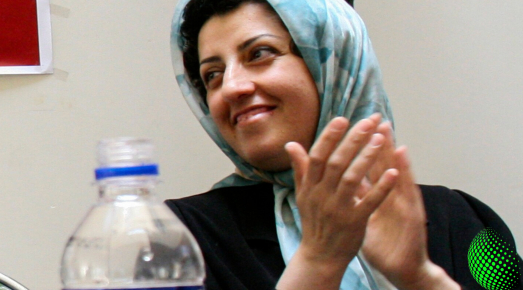
Iranian authorities have detained Narges Mohammadi, a prominent human rights advocate and Nobel Peace Prize laureate, according to statements from her supporters. The arrest reportedly took place in Mashhad, a city roughly 680 kilometers northeast of Tehran. Officials have not immediately clarified the reasons for her detention, raising renewed concerns about transparency, accountability, and due process in Iran’s judicial and security apparatus. The lack of official explanation has fueled widespread speculation about the motives behind the move, particularly given Mohammadi’s long history of challenging state policies and advocating for the rights of marginalized populations.
News of Mohammadi’s arrest has drawn swift reactions from international human rights groups, activists, and foreign governments who have closely followed her work. She has been repeatedly targeted by Iranian authorities for her outspoken criticism of government policies, particularly regarding women’s rights, political prisoners, freedom of expression, and broader civil liberties. Over the years, Mohammadi has become a symbol of resistance against systemic repression, and her continued activism has placed her in direct conflict with the state. The timing of her detention comes as Iran faces renewed international scrutiny over its treatment of dissidents, raising questions about whether authorities are attempting to intimidate other activists or suppress growing calls for reform.
Mohammadi received global recognition in 2023 when she was awarded the Nobel Peace Prize for her tireless efforts to defend human rights and promote democratic values. The award acknowledged her courage, perseverance, and the personal sacrifices she has made to advocate for justice, equality, and freedom in a challenging political environment. Despite her international acclaim, Mohammadi’s activism has carried heavy personal costs. She has endured multiple arrests, lengthy prison sentences, and harsh periods of detention, reflecting the risks faced by outspoken critics within Iran. Her persistent efforts, even under threat of imprisonment, have solidified her reputation as one of the country’s most courageous and principled human rights defenders.
Details surrounding the latest arrest remain limited, but supporters have expressed serious concern for her health and safety. In prior detentions, Mohammadi endured solitary confinement, restricted access to medical care, and other conditions that posed significant risks to her physical and mental well-being. Her detention in Mashhad, a city of major religious and political significance, has also prompted speculation that Iranian authorities may be extending their crackdown beyond Tehran and other urban centers traditionally associated with political dissent. Observers note that the choice of location may carry symbolic weight, signaling an effort to assert control in regions where activism is less visible but potentially influential.
Global human rights organizations have called for Mohammadi’s immediate release, describing the detention as a violation of fundamental freedoms guaranteed under international law. Entities such as the United Nations and Amnesty International have repeatedly urged Iranian authorities to safeguard the rights of peaceful activists and to refrain from arbitrary arrests. Mohammadi’s case is widely regarded as a litmus test for Iran’s response to sustained international pressure on human rights issues. Her detention not only highlights the ongoing challenges faced by civil society in Iran but also reflects broader systemic patterns of repression that affect journalists, lawyers, and political opponents.
Supporters worldwide have mobilized quickly, issuing public statements, launching online campaigns, and appealing to international bodies to advocate for her release. Social media platforms have amplified these efforts, drawing attention to Mohammadi’s situation and fostering solidarity among activists and concerned citizens around the globe. The arrest of such a high-profile figure underscores the persistent dangers faced by human rights defenders in Iran, where even peaceful advocacy can result in severe legal, professional, and personal consequences. For many observers, Mohammadi’s detention is emblematic of the broader struggle for freedom and accountability in a country where dissent is often criminalized.
Mohammadi’s work has inspired countless individuals both inside Iran and abroad, making her a symbol of nonviolent resistance against oppression. She has focused on exposing the plight of political prisoners, advocating for gender equality, and promoting reforms that strengthen civil liberties. At the same time, her repeated arrests highlight the broader climate of fear imposed on activists in Iran. Arbitrary detentions, long sentences, and harsh prison conditions are routinely used to suppress dissent and stifle independent voices, creating an environment where citizens must weigh the risks of speaking out against the moral imperative to do so.
Her detention has also reignited debates about the intersection of domestic policy and international diplomacy. How Iran handles Mohammadi’s case may influence foreign perceptions, shape diplomatic engagement, and affect the country’s relations with global institutions concerned with human rights. Analysts note that high-profile arrests such as this one can exacerbate tensions with foreign governments, trigger sanctions or condemnations, and influence multilateral discussions on Iran’s compliance with human rights conventions. At the same time, Tehran may view such detentions as a means of reinforcing internal control, signaling to both citizens and activists that challenges to authority carry tangible risks.
Against this backdrop, Mohammadi’s detention places renewed focus on Iran’s human rights record at a moment of heightened global scrutiny. The country has faced widespread criticism in recent years for its treatment of journalists, political activists, and members of minority communities. In this context, Mohammadi’s arrest is not an isolated incident but part of a continuing pattern in which state authorities employ legal and extralegal measures to limit the scope of public debate and curtail civic engagement. Observers point to her case as emblematic of the tensions between Iran’s commitments under international law and its domestic approach to governance and dissent.
While the immediate consequences of Mohammadi’s detention are deeply concerning, the broader implications are equally significant. Her imprisonment may influence the strategies of other human rights defenders in Iran, shaping how they navigate the delicate balance between advocacy and personal safety. It also serves as a reminder of the ongoing struggle for fundamental freedoms in countries where political activism is met with harsh reprisals. For supporters and international observers, Mohammadi’s courage continues to provide both inspiration and a rallying point for advocacy efforts aimed at promoting accountability, transparency, and justice.
In the coming days and weeks, close attention will remain on the developments surrounding Mohammadi’s situation. International observers, human rights organizations, and diplomatic actors will monitor her condition, access to legal representation, and overall treatment while in detention. The outcomes of these observations could influence broader discussions about Iran’s approach to civil liberties, potentially affecting policy decisions, international aid, and engagement strategies. Her case highlights the vital importance of global awareness and intervention in cases where fundamental rights are at stake.
Ultimately, Narges Mohammadi’s detention reinforces the stark realities faced by activists operating under repressive regimes. Her work, courage, and continued advocacy underscore the enduring power of individual action in the pursuit of justice, even in the face of repeated adversity. As the situation unfolds, her supporters remain steadfast in demanding her release, ensuring that the world continues to shine a spotlight on the challenges faced by those who risk everything to defend human rights in Iran and beyond.
Mohammadi’s life and work illustrate the ongoing struggle for justice and freedom in a country where civic participation often comes at a high cost. As the international community watches, the handling of her case will likely serve as a benchmark for Iran’s treatment of activists and may shape the global discourse on human rights and accountability for years to come. Her story continues to inspire generations of advocates, and her detention represents both a sobering challenge and a call to action for the protection of human dignity worldwide.
Source: Associated Press