Historic Floods Devastate Washington State as More Rain Looms
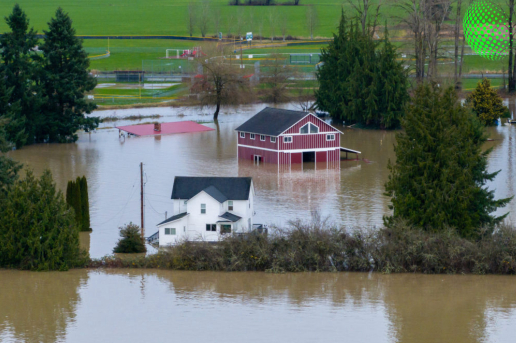
Days of unrelenting rain have pushed Washington state into a deepening flood crisis, turning communities into islands of water and debris. Families have been rescued from rooftops, bridges have disappeared beneath surging rivers, and homes have been ripped from their foundations. With another round of flooding forecast for Friday, emergency officials warn that the situation could escalate further in the coming hours, leaving residents and authorities bracing for even more destructive conditions. The relentless rainfall has compounded already saturated soils, overwhelming drainage systems and threatening infrastructure across multiple counties.
A statewide emergency declaration is now in effect, and tens of thousands of residents have been ordered to evacuate as rivers climb toward historic levels. Governor Bob Ferguson urged residents to take evacuation orders seriously, emphasizing that the scale of the flooding exceeds anything seen in recent years. "This is not a drill," Ferguson said in a press conference. "We are facing rivers at levels that challenge our infrastructure, our emergency response, and the safety of our residents. Evacuate now if you are in an affected area." Authorities warn that the current conditions leave little room for error, with fast-rising waters threatening to cut off access to essential services and potentially putting lives at risk.
Particular concern surrounds the Skagit River, which flows through a key agricultural region north of Seattle. The river is expected to crest Friday morning, prompting nearly 78,000 people to leave the floodplain. In Mount Vernon, water levels surpassed previous records late Thursday, while the nearby Snohomish River rose nearly a foot above its historical high. Officials in both regions are coordinating with state and federal agencies to manage evacuations, deploy temporary barriers, and ensure that emergency shelters can accommodate displaced families.
Flooding has spread well beyond riverbanks, affecting roads, bridges, and entire neighborhoods. Roads have vanished under muddy water, bridges have been overtaken, and entire communities have been cut off from emergency services. State Route 410 remains closed indefinitely with no detour available, while on Interstate 90 east of Seattle, a landslide trapped vehicles amid fallen trees and thick mud, stranding drivers and halting traffic. Authorities caution that such conditions are not limited to major highways; smaller county roads and rural routes have also been submerged, making rescue operations more complex and dangerous.
Northern communities near the U.S.–Canada border have been among the hardest hit. Cities including Sumas, Nooksack, and Everson have seen widespread flooding that has disrupted homes, businesses, and transportation networks. Sumas Mayor Bruce Bosch described the damage as devastating, noting that much of the city is underwater just four years after a similar disaster. The Sumas border crossing has closed, and Amtrak has suspended rail service between Seattle and Vancouver, cutting off a vital transportation link and affecting both travel and regional supply chains. Local officials are scrambling to coordinate with federal agencies to restore essential services as quickly as possible.
For residents like Mariah Brosa in the town of Concrete, the water came within inches of entering her elevated home as debris slammed into the structure. While her house was spared, her fiancé’s work vehicle was destroyed, highlighting the personal toll that the flooding is having across the region. Families like Brosa’s are facing not only property damage but also uncertainty about access to food, medical care, and safe shelter. Volunteers and local organizations are mobilizing to deliver aid, but the scale of the disaster makes rapid response challenging.
In Mount Vernon, officials are closely monitoring a floodwall that has protected downtown since major flooding in 2003. Mayor Peter Donovan said the river had reached the base of the barrier, underscoring how precarious conditions have become. Nearby Burlington has also been affected, with police officials reporting that dikes and drainage systems are being severely tested as water levels continue to rise. Emergency crews are working to reinforce levees, sandbag key areas, and prepare evacuation routes in anticipation of further rises in water levels.
Emergency crews have worked around the clock to rescue stranded residents. In Sumas, helicopters lifted families from rooftops after water levels reached nearly 15 feet, while the city’s fire station itself was flooded. In the community of Welcome, erosion along the Nooksack River caused at least two homes to collapse into the water, though fortunately no injuries were reported. First responders have emphasized the importance of heeding evacuation orders, noting that floodwaters can rise rapidly and unpredictably, leaving little time to react.
The flooding has also displaced wildlife, adding an ecological dimension to the crisis. In Snoqualmie, a herd of elk was seen wading through neck-high water across a submerged football field, while residents near Issaquah Creek rushed to deploy pumps as yards and basements filled with fast-moving water. Animal rescues have become a secondary priority for some emergency teams, as pets and livestock are trapped alongside residents and must be evacuated or sheltered safely.
Scientists caution that while individual storms cannot be directly attributed to climate change without detailed analysis, there is a broader trend of increasing frequency and intensity of rainfall events as global temperatures rise. This latest flooding event is consistent with a pattern of extreme weather that has stressed infrastructure, emergency response systems, and community preparedness. Another storm system is expected to arrive Sunday, bringing additional rain to an already saturated region and stretching emergency resources even further. Meteorologists warn that river levels could rise again, compounding the destruction already caused by this week’s rainfall.
In the days ahead, the scale of damage and the speed of recovery will depend largely on how quickly rivers recede, the condition of levees and flood barriers, and whether additional storms materialize as forecast. For now, Washington faces a prolonged emergency, with communities bracing for more challenges even as rescue and relief efforts continue. Local governments are urging residents to prepare for extended periods without utilities, to secure personal belongings, and to remain vigilant as conditions evolve.
Beyond the immediate physical impacts, the flooding is expected to have long-term social and economic consequences. Agriculture in the Skagit Valley and other flood-prone regions has been heavily impacted, with crops submerged and farmlands rendered unusable. Businesses in downtown areas are facing closures due to water damage, and insurance claims are expected to rise dramatically. Officials stress that recovery will take months and possibly years, depending on how quickly emergency measures can restore basic services and infrastructure.
Community organizations, faith groups, and volunteers have stepped in to provide critical support, from distributing food and clean water to offering temporary shelter. Emergency management teams are coordinating with the National Guard, Red Cross, and FEMA to ensure that the most vulnerable residents receive aid. The situation has drawn attention from state and federal lawmakers, many of whom have pledged assistance and funding to support recovery and mitigation efforts.
As floodwaters continue to reshape the landscape of affected communities, residents and authorities alike are grappling with uncertainty. The resilience of Washington’s citizens, first responders, and emergency infrastructure will be tested in the coming days, particularly if forecasts for additional storms prove accurate. For now, families remain evacuated, neighborhoods are submerged, and the state’s attention is firmly focused on immediate safety and long-term recovery planning.
Source: PBS