YouTube Free Users Face Monthly Lyric Limits in Premium Test
Google has begun limiting access to song lyrics for some free YouTube Music users, a move that is already generating discussion among listeners and industry observers. According to multiple reports, the company is rolling out a new restriction that caps how many songs’ lyrics ad-supported users can view in full each month. The change appears to be an extension of a test launched last September, when lyrics access was first explored as a potential Premium-only feature.
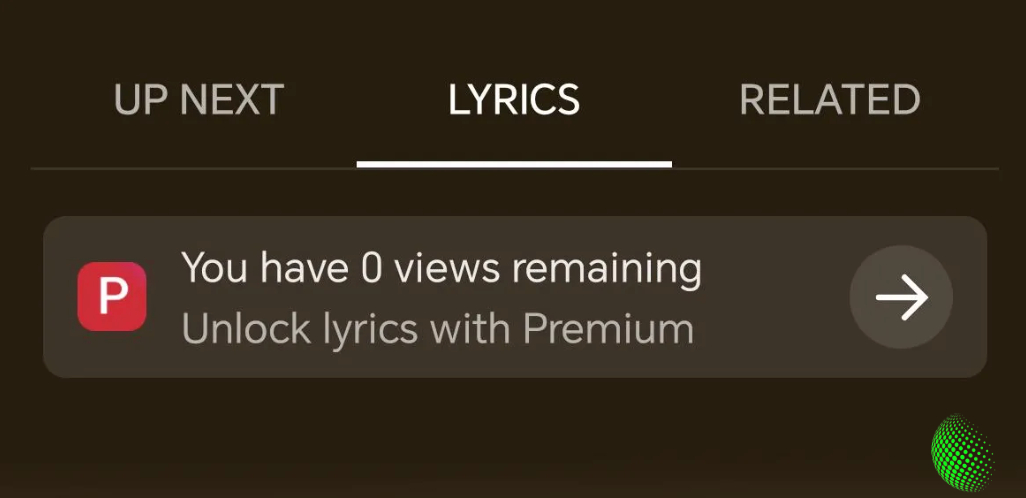
Under the updated system, free users are reportedly allowed to view full lyrics for only five songs per month. Once that limit is reached, the lyrics section becomes partially obscured. Users can still see the opening lines of a song, but the remainder is blurred, accompanied by a prompt encouraging them to upgrade. The message reads, “Unlock lyrics with Premium,” clearly positioning full lyrics access as a paid benefit.
The restriction is reinforced by a visual banner that appears when users tap the lyrics tab. This banner includes a countdown indicating how many lyric views remain for the month, adding a sense of scarcity and urgency. While the feature does not affect music playback itself, it changes a long-standing expectation that lyrics are a freely available part of the listening experience.
A YouTube spokesperson confirmed the experiment, stating that the company is testing changes with a small percentage of ad-supported users that may affect how often they can access the lyrics feature. The spokesperson emphasized that experiments like this are a routine part of improving YouTube Music and noted that the majority of users worldwide will not see any changes for now.
Google has framed the move as part of its broader effort to evaluate how users engage with YouTube Music features and determine which elements provide enough value to justify inclusion in its Premium tier. In recent years, the company has increasingly focused on differentiating paid subscriptions not just through ad removal, but by offering exclusive features that enhance the overall experience.
User reactions have been mixed. Some listeners understand the logic behind reserving certain features for paying subscribers, particularly as music streaming services face pressure to improve profitability. Others argue that lyrics have long been considered a basic feature rather than a premium add-on. For many fans, lyrics are essential for singing along, understanding song meanings, or following music in unfamiliar languages.
The timing of the change is notable given the intense competition in the music streaming market. Rival platforms commonly offer full lyrics as a standard feature, often with real-time synchronization that enhances engagement. As a result, limiting lyrics could risk making YouTube Music’s free tier feel less competitive, especially for users who frequently explore new songs.
By placing lyrics behind a paywall, YouTube Music is betting that the feature carries enough emotional and practical value to encourage upgrades. This approach reflects a broader trend across subscription-based services, where features that were once free are gradually shifted into paid tiers to increase average revenue per user.
Still, the strategy carries risks. Some free users may simply look up lyrics elsewhere rather than subscribe, while others could migrate to competing services that continue to offer the feature at no cost. There is also the possibility that users perceive the change as a step too far, potentially damaging goodwill toward the platform.
The limited rollout suggests that Google is closely monitoring user behavior and feedback before making a permanent decision. Conversion rates, listening habits, and overall engagement will likely determine whether the restriction is expanded to a wider audience or quietly rolled back.
For now, the impact remains relatively contained, affecting only a small subset of users. However, even small experiments can shape public perception, especially among dedicated listeners who rely heavily on lyrics as part of their music experience. For those users, a limit of five songs per month may feel especially restrictive.
Free users who encounter the cap may need to be more selective about when they view lyrics, prioritizing songs they care about most. Others may view the restriction as a tipping point that makes a Premium subscription more appealing, particularly when combined with ad-free listening and offline playback.
Ultimately, the move highlights the ongoing balancing act faced by streaming platforms: offering enough value to free users to keep them engaged, while still creating strong incentives to subscribe. As the streaming market matures and growth slows, companies are increasingly testing where that balance lies.
Whether this lyrics limitation becomes a permanent feature remains uncertain. What is clear is that YouTube Music is actively experimenting with how far it can push feature differentiation. As competition intensifies, even seemingly small features like lyrics are becoming key battlegrounds in the fight for user loyalty and subscription revenue.
Source: The Verge