Chloe Kim Secures Olympic Spot with Top Qualifier Score Despite Shoulder Injury
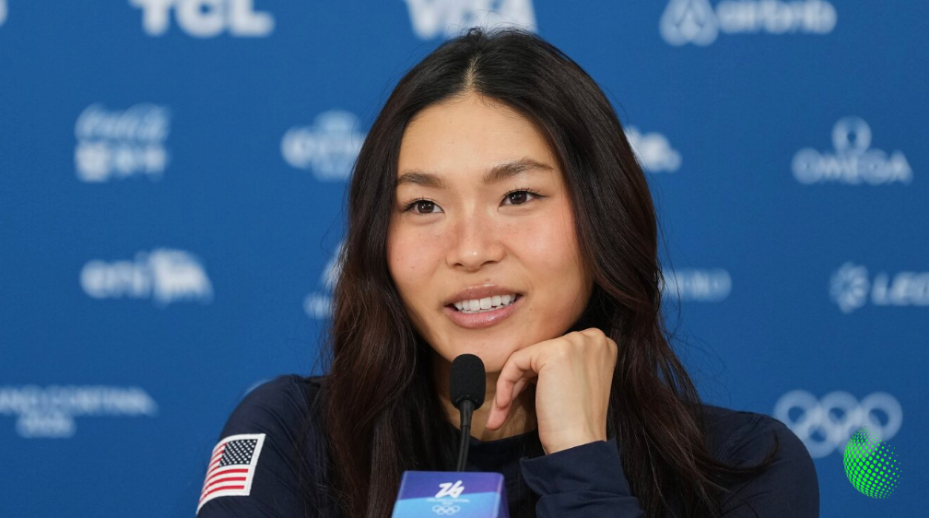
Chloe Kim broke the 90-point mark in her very first run of the snowboard halfpipe Olympic qualifiers in Livigno, Italy, delivering a statement performance that immediately set her apart from the rest of the field. The score not only underscored her technical precision and trademark style, but also reinforced her status as the athlete to beat as the competition moves deeper into the Games.
The qualifier marked another pivotal moment in the remarkable career who continues to redefine what sustained excellence looks like in a sport known for rapid generational turnover. From prodigy to veteran contender, Kim’s trajectory has been anything but ordinary, and her latest showing suggested she is as composed and competitive as ever.
Kim was just 17 years old when she captured halfpipe gold at the 2018 PyeongChang Games, becoming the youngest woman to win an Olympic snowboard medal. Four years later, she defended her title in Beijing, cementing her place in Olympic history. Now 25, she arrives at the with the chance to accomplish something no halfpipe snowboarder has ever achieved: a third consecutive Olympic gold.
Joking with reporters, Kim referred to herself as the “proud owner of a frontal lobe,” a lighthearted nod to the maturity and perspective she says now shape her approach to competition. That evolution was evident in Livigno, where she looked calm, controlled, and deliberate rather than fueled by nerves or urgency.
Kim took a decisive step toward that historic three-peat on Wednesday by finishing first in the qualifying round, comfortably securing her place in Thursday’s final. Out of roughly two dozen competitors, she was the only rider to surpass 90 points, an achievement that highlighted both the difficulty and cleanliness of her run.
“I’m honestly really happy with who I’ve become,” Kim said afterward. “Going into these Games, I felt really at ease and calm, and I know what I’m here to do.” Her comments reflected a confidence rooted not just in talent, but in experience and self-awareness.
Joining Kim in the final round are fellow Americans Maddie Mastro and Bea Kim, who finished third and tenth, respectively. The trio will represent Team USA in a final stacked with rising stars and seasoned contenders. Missing the cut was teammate Maddy Shaffrick, whose journey back to the Olympics more than a decade after her teenage retirement ended just outside the top 12.
Kim’s commanding performance also helped quiet concerns about a recent shoulder injury that had limited her training in the weeks leading up to the Games. The injury, which includes a torn labrum sustained during training in Switzerland, had cast uncertainty over her readiness. Kim acknowledged Wednesday that while her shoulder is improving, surgery will be required after the Olympics conclude.
“Honestly, I’m just happy to be here,” Kim said. “A couple months ago, it wasn’t looking too certain. I’m really stoked that I was able to make it out and get through qualifiers.” For Kim, simply standing at the top of the pipe represented a victory over doubt and physical limitation.
The Olympics are, in fact, Kim’s first competition of the season. After qualifying a year in advance, she stepped away from early events and only resumed full training about two weeks ago. During that time, she relied on a tightly secured shoulder brace, which she says has unexpectedly improved her riding.
According to Kim, the brace has forced her to be more stable and deliberate, limiting excess movement in her trailing arm. That restraint, she believes, may have contributed to the smoothness and consistency evident in her qualifying run.
“Once we’re in there and focusing on what we want to do, my mind goes completely blank,” Kim explained. “I’m not thinking about my shoulder. I’m just thinking about what I’m trying to accomplish in this run.” That mental clarity, she said, has made a tangible difference.
Kim’s mental approach has been forged through years of high-pressure moments, including her experience at the Beijing Games. She recalled having an “awful practice” session just before competition there, yet still delivered such a strong first run that even subsequent falls couldn’t knock her off the top of the podium.
“Every run is a new run,” Kim said. “Just because I had an hour of bad snowboarding doesn’t mean the next 45 seconds will be bad.” It’s a philosophy grounded in trust—trust in preparation, muscle memory, and the ability to reset.
Since her second Olympic gold, Kim has remained dominant on the global stage. She has added two more X Games gold medals, multiple World Cup victories, and a third world championship in 2025. Rather than plateauing, she has continued to evolve, refining her style while pushing the technical ceiling of the sport.
Kim revealed that the run she is planning for the Olympics is unlike anything she has competed with before. The sequence, she said, represents a culmination of years of progression rather than a repetition of past successes.
“If I’m able to pull that off, regardless of where I place, I’ll be really content,” she said. “I have all the pieces done and dialed. I just need to put everything together.” The comment underscored a shift from outcome-driven pressure to process-driven satisfaction.
Despite her injury, Kim remains the clear favorite for gold. Still, the field is far from settled. One of her most compelling challengers is Korea’s Gaon Choi, a 17-year-old phenom whose age mirrors Kim’s when she first won Olympic gold. Choi has openly described Kim as her idol and advanced to the final after placing sixth in qualifiers.
Kim spoke warmly about Choi earlier in the week, calling the moment “full circle.” Having known Choi since her early days in the sport, Kim said watching her rise has been both surreal and meaningful.
“Sometimes it feels like I’m seeing a mirror reflection of myself and my family,” Kim said. The comment carried added resonance given Kim’s own background, with parents who emigrated from Korea and supported her ascent from local competitions to Olympic dominance.
As the final approaches, Kim’s blend of experience, innovation, and composure has positioned her at the center of the Olympic narrative. Whether or not she ultimately completes the historic three-peat, her presence has already shaped the competition, setting the standard that others must chase.
For Kim, however, the moment is about more than medals. It is about growth, resilience, and the satisfaction of executing her vision on the sport’s biggest stage. As she drops into the pipe for the final, she does so not just as a defending champion, but as an athlete fully in command of her craft and her career.
Source: NPR