US Public Health Service Officers Resign Over ICE Detention Deployments
The Department of Homeland Security's aggressive push to detain and deport immigrants in 2025 has created a surge in the number of detainees, along with a pressing demand for medical staff at detention facilities across the United States. Stephen Smith/AP hide caption
As immigrant arrests by U.S. Immigration and Customs Enforcement (ICE) soared last year, so too did the need for health care providers to staff rapidly constructed and often overcrowded detention centers. Among those called upon to meet this demand was the U.S. Public Health Service (USPHS), a uniformed branch of health professionals tasked with responding to public health crises. In 2025, nearly 400 officers were deployed for monthlong tours at ICE facilities nationwide, according to a USPHS employee who reviewed a roster of staff assignments.
The deployed officers encompass a wide range of professionals, including nurses, doctors, pharmacists, and other health specialists. Yet an increasing number of those assigned to these facilities report that the work is in conflict with the mission they signed up to fulfill. Life-threatening delays in accessing medicine, chaotic and crowded screening processes, and understaffed conditions have prompted some officers to resign rather than continue participation.
"We have been tasked with protecting and promoting health, and instead, we are being asked to facilitate inhumane operations," said Rebekah Stewart, a nurse practitioner who left the service in October. Her remarks highlight a growing moral dilemma faced by personnel whose professional obligations clash with the operational goals of ICE.
Many Americans are unfamiliar with the USPHS, a commissioned corps of roughly 5,000 uniformed, non-combatant officers who mostly work at federal agencies such as the Indian Health Service, the Food and Drug Administration, and the Centers for Disease Control and Prevention. Historically, officers are deployed to respond to public health crises, including natural disasters, disease outbreaks, and other humanitarian emergencies. Such missions are generally understood as neutral, service-oriented, and ethically uncontroversial.
However, officers’ recent assignments to ICE detention centers are landing differently. Some have described the experience as a profound moral conflict, leading them to resign or consider leaving the service entirely. NPR spoke with 12 current or former officers, six of whom indicated that ICE deployments were a primary reason for their decision to depart. Only two spoke on the record; the remainder requested anonymity due to fear of reprisals.
Dena Bushman, a nurse practitioner in the USPHS since 2019, said she was disturbed by reports in early 2025 of federal agents rounding up immigrants in places like Home Depot parking lots using unmarked vans and masked personnel. The arrests appeared inhumane and potentially illegal to her, raising serious ethical concerns about participating in subsequent detention assignments. She resigned on January 6, explaining, "Staffing those facilities is being part of that process, and I do not want to be complicit."
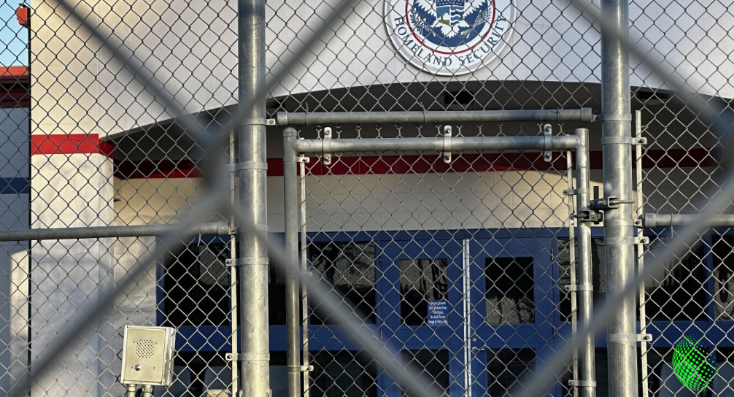
ICE detentions reached their highest levels in nearly two decades last year, according to nonprofit organizations that track immigration enforcement data. ICE reported that roughly 71,000 people were held at 225 facilities nationwide, including local jails, federal prisons, military bases such as Guantanamo Bay, Cuba, and "soft-sided" temporary facilities operated by private contractors. While ICE has maintained its own health service corps since 2007, USPHS officers are sometimes called upon when the need for clinicians exceeds existing capacity.
Although ICE’s official standards state that detention is intended to be non-punitive and that detainees are entitled to "appropriate medical, dental, and mental health care," numerous reports from media outlets, human rights groups, and Senate investigations describe widespread abuses. Overcrowding, insufficient medical attention, and inhumane conditions persist across multiple facilities. In 2025 alone, 32 detainees died in ICE custody, marking one of the deadliest years in decades, including two victims of a shooting in Texas, according to NPR’s tally of ICE death notifications.
The conflict for USPHS officers is evident: they are tasked with providing care to vulnerable populations while functioning within a system they view as causing harm. "The very government that is trying to send [us] to facilities to 'take care of them' is the government that made them vulnerable in the first place," said Stewart, illustrating the circular and ethically fraught nature of these deployments.
Officers recount facing extreme challenges in delivering care. One nurse deployed to an El Paso detention center described the facility as operating at three times its intended capacity, with insufficient staff to meet basic medical needs. ICE officers prioritized rapid deportation, while USPHS officers were attempting to ensure detainees received essential care and medications. "We were essentially slowing the ICE officers down from just getting these people out," the nurse said. Compromises to medical confidentiality—such as conducting group screenings of 20 to 30 detainees for personal health information—further contributed to officers’ moral distress.
Delays in providing medication, including insulin and anti-epileptic drugs, led to medical emergencies, and officers felt powerless to intervene adequately. Many resigned rather than participate in what they saw as an ethically compromising system. "I don't need to stay and serve an institution that doesn't understand its mission," one clinician said.
Even facilities operated by the Bureau of Prisons presented challenges. Officers reported major delays in accessing critical resources and a pervasive distrust of detainees by staff, leading to further harm. In some cases, detainees with serious medical conditions—such as kidney stones or fractures—experienced delayed treatment because staff doubted their accounts, prioritizing verification over urgent care. Yet, clinicians found purpose in serving detainees directly, particularly those transferred from notoriously abusive centers. These interactions reinforced the core commitment of many officers to care for marginalized populations, even if the institutions themselves were morally compromised.
Experts in bioethics warn of the consequences of such assignments. Hilary Mabel, a bioethicist at Emory University, noted that when clinicians cannot make ethically sound decisions or lack adequate resources, moral distress often forces them to leave their positions or even change professions. "When people feel like they can't maintain their integrity or live up to their professional responsibilities, they change jobs or even professions," she said. The resulting exodus of ethically conscientious staff has serious implications for the quality of care delivered to detainees.
Last year, roughly 340 USPHS officers left the service, with 290 receiving pensions and 50 departing before qualifying for retirement benefits. Admiral Brian Christine, Assistant Secretary for Health, defended the service’s approach, emphasizing the importance of fulfilling its mission: "Our duty is clear: say 'Yes Sir!', salute smartly, and execute the mission: show up, provide humane care, and protect health with professionalism and compassion."
Yet the morale crisis persists. Former USPHS Commander Jonathan White highlighted the strain caused by leadership that dismisses scientific and ethical standards, noting that clinicians may despair when their work inadvertently enables harm. "No amount of professionalism and care from USPHS officers can make a mass deportation system not be harmful to people's health," he said.
Ultimately, the situation presents a paradox: while officers improve detainees’ short-term quality of life, their work can perpetuate long-term harm within a system many view as inherently unethical. Clinicians who question these assignments often leave, weakening the nation’s public health infrastructure and limiting the capacity for future humanitarian response. As one physician reflected, "People who question deployments and say, 'Is this the right thing to be doing?' – we want people like that in the corps. I want to serve with people like that."
The ongoing departures, coupled with inadequate staffing, suggest a troubling trajectory for the USPHS. The agency faces a moral and operational crossroads, balancing its mission to care for vulnerable populations against the demands of a detention system that officers increasingly view as incompatible with public health ethics. The decisions made in the coming years will not only affect the officers themselves but also the tens of thousands of detainees who rely on competent and compassionate medical care during periods of extreme vulnerability.
NPR's Ximena Bustillo contributed to this report.
Source: NPR