Indiana's Historic Win: Mendoza's Legendary Run Seals First National Championship
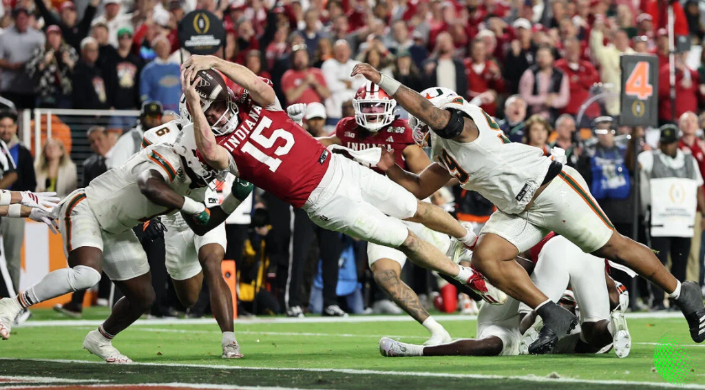
It was a game that will be remembered in Indiana football history for generations. No. 1 Indiana faced off against No. 10 Miami in the College Football Playoff National Championship, and while the scoreboard read 27-21, the story was all about Heisman Trophy-winning quarterback Fernando Mendoza and his legendary 12-yard touchdown run on fourth down with 9:18 remaining. For a moment that will be replayed endlessly, Mendoza didn’t just score; he cemented his name in the annals of Hoosiers lore.
For Mendoza, a Miami native who wasn’t offered a scholarship by the Hurricanes, the journey to Hard Rock Stadium was already cinematic. Completing a storybook arc against his hometown team was a narrative that Hollywood screenwriters could only dream of crafting. But the touchdown run—an audacious quarterback draw after initially sending out the kicking unit—was just one highlight. Mendoza’s leadership, clutch throws, and composure under pressure propelled Indiana to its first national championship.
The fourth quarter, with the game hanging in the balance, became a showcase of Mendoza’s poise. Twice in critical moments, he turned to sophomore receiver Charlie Becker for back-shoulder throws, and Becker delivered with precision. With 11:28 left on a fourth-and-5 from Miami’s 37-yard line, a punt would have done little, and a successful 54-yard field goal would have left Indiana just six points ahead. Instead, Mendoza’s connection with Becker gained 19 crucial yards, setting up a touchdown that would prove vital. Later, with under four minutes to play and third-and-7, Mendoza again found Becker for another 19-yard gain, setting up a field goal to extend Indiana’s lead.
While Mendoza orchestrated the offense with brilliance, Indiana’s defense also rose to the occasion. Redshirt junior defensive back Jamari Sharpe, nephew of former Hurricanes defensive back Glenn Sharpe and himself a Miami native, intercepted quarterback Carson Beck with 44 seconds remaining to seal the win. Sharpe finished with six tackles and a game-clinching play that will be remembered forever, a storybook ending echoing Mendoza’s heroics on the other side of the ball.
The game itself was a battle of strategy, grit, and physicality. Indiana relied on time of possession and methodical drives to wear down Miami’s top-rated defense. The Hoosiers controlled the ball for nearly 31 minutes compared with Miami’s 20, rushing for 102 yards and converting two critical fourth-down plays. Every yard gained was earned the hard way, often against a relentless pass rush that left Mendoza battered at times, including one hit that left his mouth bloodied. Yet the quarterback never wavered, adjusting to the Hurricanes’ defensive schemes and maintaining the composure of a seasoned veteran.
Miami, meanwhile, was far from out of it. The Hurricanes’ standout running back Mark Fletcher Jr. carried the load with 16 carries for 109 yards and two touchdowns, including a 57-yard breakaway that electrified the stadium. Freshman receiver Malachi Toney added a 22-yard touchdown catch that pulled Miami within a single score early in the fourth quarter. Yet Indiana’s offense consistently answered, using precise short passes, critical third-down conversions, and the occasional explosive play to maintain the edge. Omar Cooper Jr. and Charlie Becker were instrumental in these drives, combining for over 90 yards and creating space for key scoring opportunities.
Special teams also played a pivotal role. In the third quarter, Indiana’s defensive lineman Mikail Kamara blocked a Miami punt, and Isaiah Jones returned it for a touchdown, negating Miami’s dominance in yardage and momentum. This play highlighted Indiana’s resilience and ability to capitalize on every opportunity—a hallmark of championship-caliber teams.
The Hoosiers’ offensive line, largely composed of homegrown talent, stood tall against Miami’s vaunted defensive front. Of the ten starters in the championship game, seven had been on campus since the previous season, and only two were newcomers. Their protection allowed Mendoza to execute precise throws, connect with receivers on key third downs, and launch his historic touchdown run. Running backs Roman Hemby and Kaelon Black combined for 139 rushing yards, with Black’s 20-yard burst opening the door for Mendoza’s early scoring drive.
Defensively, Indiana’s unit absorbed the Hurricanes’ pressure and delivered timely stops. Rueben Bain Jr. and Akheem Mesidor applied consistent pressure on Mendoza during the first half, and though they managed to limit Indiana to just 11 total yards in the third quarter, the Hoosiers’ patience paid off. A combination of strategic short passes, clock management, and opportunistic plays—like the blocked punt—kept Indiana ahead and frustrated Miami’s defense.
The game’s ebb and flow reflected the intensity of a championship matchup. Miami, adept at explosive plays and methodical drives, managed to generate 150 yards in the third quarter alone but failed to convert opportunities into a decisive lead. Meanwhile, Indiana’s methodical approach, patience on third and fourth downs, and reliance on Mendoza’s dual-threat ability carried them through. Each possession was a chess match, every decision—timeouts, quarterback draws, and target selection—executed with precision.
In the final moments, Miami had one last chance. With 1:47 left on the clock, they faced a 75-yard drive for a possible game-winning score. Yet, despite Fletcher and Toney’s heroics, Carson Beck’s pass to Jamari Sharpe sealed the Hoosiers’ victory. The interception was a culmination of Indiana’s disciplined defense, smart coverage, and the sheer will to protect a historic lead.
For Mendoza, the victory was both personal and historic. Completing a storybook arc against his hometown team, leading a methodical yet thrilling game plan, and executing a play that will be replayed for decades, he embodied the traits of a true champion. His 186 passing yards, 12-yard touchdown run, and critical third-down conversions were just the statistical representation of what was a dominant, clutch, and unforgettable performance.
Indiana’s first national championship was built on balance: an offense led by a Heisman-winning quarterback, a defense capable of clutch stops, and special teams that delivered when it mattered most. Every unit contributed, but Mendoza’s heroics, Becker’s precise receiving, Sharpe’s game-sealing interception, and the entire offensive line’s resilience created a perfect storm of championship football.
The Hoosiers’ triumph over Miami will be remembered not just for the scoreboard but for the storylines: the hometown hero, the underdog Heisman winner, the clutch plays under pressure, and the historical significance for the program. In the end, Indiana’s methodical execution, combined with moments of sheer brilliance, earned a 27-21 victory and a place in college football history.
Fernando Mendoza’s 12-yard touchdown run on fourth down will forever be etched in highlight reels, symbolizing a season of excellence, determination, and a legacy that goes beyond a single game. In the end, this game was more than a championship—it was a narrative of perseverance, strategy, and the type of heroics that define legends.
Source: CBS Sports