Nasa Artemis II: Rocket moves to launch pad ahead of first crewed Moon mission in decades - follow live - BBC
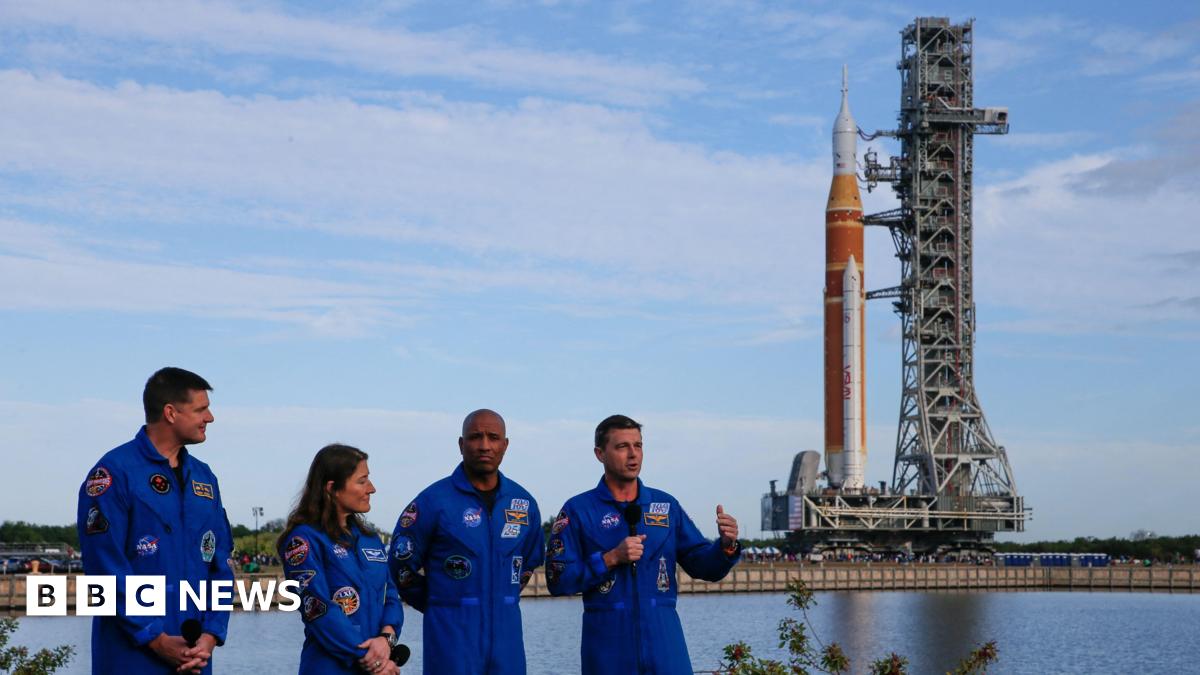
Pallab Ghosh and Alison FrancisScience Correspondent and Senior Science Journalist Several other countries have ambitions to put people on the Moon in the 2030s. European astronauts are set to join later Artemis missions and Japan has also secured seats. China is building its own craft, targeting a first landing near the Moon's south pole by 2030. Russia continues to talk about flying cosmonauts to the surface and building a small base sometime between about 2030 and 2035. However, sanctions, funding pressures and technical setbacks mean its timetable is highly optimistic. India has also expressed ambitions to one day see its own astronauts walking on the Moon. Following the success of Chandrayaan 3's landing near the lunar south pole in August 2023, India's space agency set out a goal of sending astronauts to the Moon by about 2040. This would be part of a push to move its human spaceflight programme beyond low Earth orbit. Artemis II's crew of four includes Nasa commander Reid Wiseman, pilot Victor Glover, and mission specialist Christina Koch. A second mission specialist, Jeremy Hansen of the Canadian Space Agency, will also be on board. Pallab Ghosh and Alison FrancisScience Correspondent and Senior Science Journalist India's unmanned spacecraft was the first to land on the Moon's south pole in 2023 - it wants to get astronauts to the moon by 2040 Several other countries have ambitions to put people on the Moon in the 2030s. European astronauts are set to join later Artemis missions and Japan has also secured seats. China is building its own craft, targeting a first landing near the Moon's south pole by 2030. Russia continues to talk about flying cosmonauts to the surface and building a small base sometime between about 2030 and 2035. However, sanctions, funding pressures and technical setbacks mean its timetable is highly optimistic. India has also expressed ambitions to one day see its own astronauts walking on the Moon. Following the success of Chandrayaan 3's landing near the lunar south pole in August 2023, India's space agency set out a goal of sending astronauts to the Moon by about 2040. Pallab Ghosh and Alison FrancisScience correspondent and senior science journalist If all systems are go, the earliest possible launch date for Artemis II is Friday 6 February. As well as the rocket being ready, the Moon has to be in the right place too, so successive launch windows are selected accordingly. In practice, this means one week at the beginning of each month during which the rocket is pointed in the right direction followed by three weeks where there are no launch opportunities. The potential launch dates are: Pallab Ghosh and Alison FrancisScience correspondent and senior science journalist The last crewed Moon mission was Apollo 17, which landed in December 1972 and returned to Earth later that month. In all, 24 astronauts have travelled to the Moon and 12 of them have walked on its surface, all during the Apollo programme. America first went in the 1960s, primarily to beat the Soviet Union to assert its geopolitical and technological dominance. Once that goal was achieved, political enthusiasm and public interest ebbed, as did the money for future Moonshots. The Artemis programme grew out of a desire to return humans to the Moon, but this time for a longer-term presence built around new technology and commercial partnerships. Katie WilliamsLive reporter We've just heard from crew of Artemis II, here are the key takeaways: The rocket continues to inch closer to the launch pad but is still some hours off reaching its destination - you can follow its movements at the top of this page. We can now bring you a video update on the Artemis II rocket's four-mile journey towards the launch pad. As a reminder, today's move is part of the preparations ahead of its launch - which is not expected to take place until 6 February at the earliest. This video can not be played Artemis II rocket continues journey from storage to launch pad Pallab Ghosh and Alison FrancisScience correspondent and senior science journalist No, this mission is to lay the ground for a lunar landing by astronauts in the Artemis III mission. Nasa says the launch of Artemis III will take place "no earlier than" 2027. But, experts believe 2028 is the earliest possible date. When Artemis III finally flies, the astronauts will be heading to the Moon's south pole. After that mission, the aim is to have a sustained human presence. Artemis IV and V will begin building Gateway, a small space station circling the Moon. That will be followed by more Moon landings, extra sections being added to Gateway, and new robotic rovers operating on the surface. More countries are expected to be involved in keeping people living and working on and around the Moon for longer periods. This video can not be played Nasa rocket on the move - the first 10 minutes in 10 seconds We're now seeing images of the rocket leaving Nasa's Kennedy Space Center's Vehicle Assembly Building in Florida. It will now begin its four mile journey to the launch pad. In the video above, you can see a timelapse of the first 10 minutes of its journey - and you can follow along with its current movements by clicking watch live above. Pallab Ghosh and Alison FrancisScience correspondent and senior science journalist Mission specialists Jeremy Hansen and Christina Koch, pilot Victor Glover and Nasa Commander Reid Wiseman Lift-off won't happen until 6 February at the earliest, but that only marks the beginning of the mission. Once they are safely in orbit, the astronauts will test how the Orion spacecraft handles. This will involve manually flying the capsule in Earth orbit to practise steering and lining up the spacecraft for future Moon landings. They will then head out to a point thousands of kilometres beyond the Moon to check Orion's life‑support, propulsion, power and navigation systems. The crew will also act as medical test subjects, sending back data and imagery from deep space. They will work in a small cabin in weightlessness. Radiation levels will be higher than on the International Space Station, which is in low‑Earth orbit, but still safe. On return to Earth, the astronauts will experience a bumpy return through the atmosphere and a splashdown off the west coast of the US, in the Pacific. Artemis II commander Reid Wiseman has previously told the press that his spacecraft will fly over large areas of the Moon that previous Apollo missions have never mapped. He says the crew will see things "that no human has ever seen". Mission specialist Christina Koch explained that the astronauts will be able to study the lunar surface in exquisite detail for a full three hours. "Believe it or not, human eyes are one of the best scientific instruments that we have," she says. "We've been training how to turn those observations into answering some of the biggest questions of our time, questions like: 'Are we alone?'" she adds. "We can answer that by going to Mars in the future, and this mission can be the first step in bringing that answer back to team humanity." Katie WilliamsLive reporter A Nasa spaceship that will carry astronauts around the moon for the first time in five decades is set to be transported to its launch pad today - watch live above. The gigantic Space Launch System (SLS) Moon rocket and Orion Space Capsule will journey from Nasa's Kennedy Space Center in Florida to a launch pad around four miles (6.4km) away. The operation is expected to take around 12 hours. This rocket, part of the Artemis II mission, is not set to launch into space until 6 February at the earliest. The 10-day mission could take its astronauts further into space than anyone has been before. It aims to set the stage for an eventual human landing on the lunar surface for the first time since the Apollo missions of the 1960s and 70s. Yesterday, Nasa posted on X: "Ready to roll!" We won't be bringing you regular text updates on this page, but our next few posts will take you through what you need to know. Nasa's crawler will transport the rocket to the launch pad